




Your Jeep Dashboard Lights Guide: What Those Symbols Mean and When to Act
You're heading down Route 9 through Elizabethtown when a light pops up on your dashboard. Your stomach drops. Is it serious? Can you keep driving to Lake Placid, or should you pull over right now?
Dashboard warning lights can feel confusing, but they're actually your Jeep's way of talking to you. Think of them as early warning signals. They help you catch small problems before they turn into expensive repairs or leave you stranded on a winter night.
At Adirondack Auto, we've helped North Country drivers decode these symbols for decades. Our service team sees them every day. We know which ones mean "pull over now" and which ones just need attention soon. Let's walk through the most common dashboard lights you'll see in your Jeep vehicle.
Understanding the Color System
Your Jeep uses three colors to tell you how urgent a problem is.
- Red lights mean stop immediately. These signal serious safety issues like brake failure, oil pressure loss, or engine overheating. Pull over safely and turn off the engine.
- Yellow or orange lights mean get it checked soon. These warn you about developing problems. You can usually keep driving, but schedule service within a few days to prevent bigger issues.
- Green or blue lights just confirm a system is working. Your turn signals, high beams, or cruise control are active. Nothing to worry about.
Critical Red Warning Lights
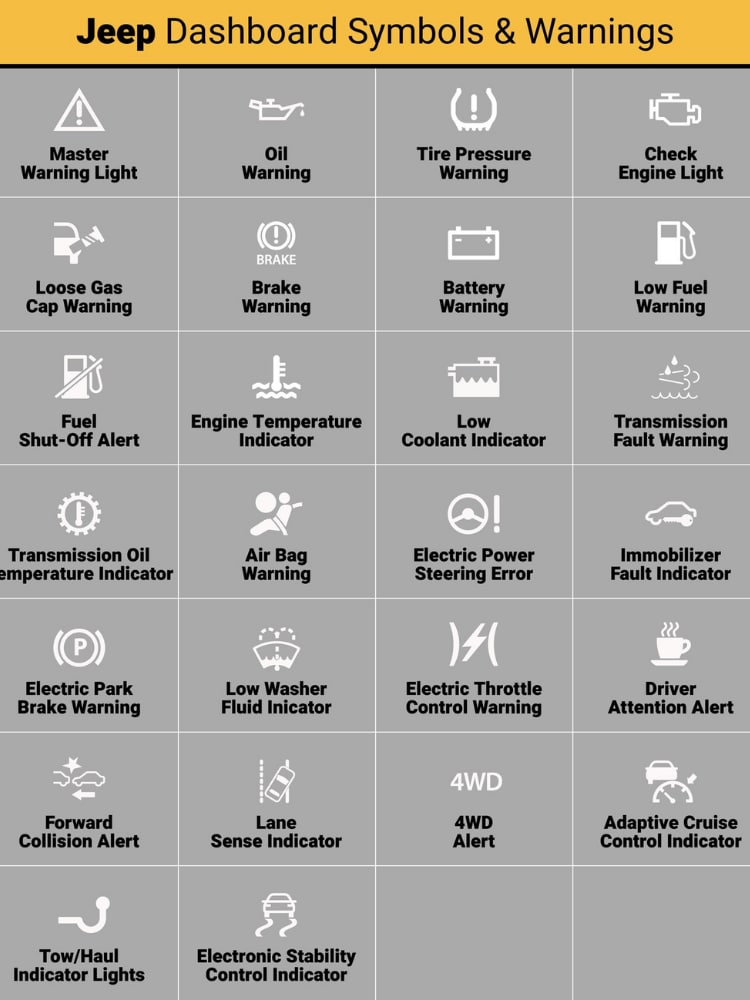
Check Engine Light
This symbol looks like a little engine outline. A steady check engine light could mean anything from a loose gas cap to a sensor malfunction. It needs diagnosis, but it's not an emergency.
A flashing check engine light is different. Pull over immediately. This means your engine is misfiring, and continued driving can cause serious internal damage. Call us at 518-412-3894 for help.
Oil Pressure Warning
See that oil can icon? That's your oil pressure warning. Your engine needs oil pressure to survive. Without it, metal parts grind together and overheat.
Stop driving as soon as it's safe. Turn off the engine. Even a few minutes without proper oil pressure can destroy an engine. This repair costs thousands of dollars if ignored.
Engine Temperature Warning
This thermometer symbol (some drivers say it looks like a sailboat) means your engine is running too hot. Summer traffic through Lake Placid or climbing steep grades can push your engine hard.
Pull over and let your Jeep cool down. Continuing to drive with an overheated engine can warp cylinder heads and blow gaskets. Give it 30 minutes to cool before checking coolant levels.
Brake Warning Light
Your brakes keep you safe on winding mountain roads. If you see "BRAKE" light up or a circle with an exclamation point, check your parking brake first. Released and the light is still on? You might have low brake fluid or a brake system problem.
The "ABS" light points to your anti-lock braking system. This matters especially in winter when you need ABS to prevent skidding on icy roads. Get it checked right away.
Important Yellow and Orange Lights
Tire Pressure Monitoring System (TPMS)
This looks like an exclamation point inside a flat tire. One or more of your tires has low pressure. In the Adirondacks, temperature drops can make tires lose pressure fast. Cold air contracts, and suddenly your tires are underinflated.
Low pressure affects handling and increases blowout risk. It also hurts fuel economy. Check all four tires plus your spare. Inflate them to the PSI listed in your owner's manual or on the driver's door jamb.
Battery Warning
That battery icon doesn't always mean your battery is dead. Often it signals a charging system issue. Your alternator might not be working properly.
Your battery should charge itself while you drive. If it's not, you'll eventually lose power to essential systems. Get this diagnosed soon before you end up stranded.
Gas Cap Warning
This easy fix shows either a gas cap alone or a gas cap next to a car. If your gas cap is loose or not sealed, fuel evaporates and triggers false emissions warnings.
Tighten your gas cap until it clicks. The light should turn off after a few drive cycles. If it stays on, you might need a new cap. We keep them in stock.
4WD Service Light
Many Jeep owners around here use four-wheel drive regularly. You need it for winter roads and trail access. If you see "SERV 4WD" or a 4WD warning symbol, your four-wheel-drive system needs attention.
Sometimes this happens after switching between 2WD and 4WD modes. Other times it indicates a transfer case problem. Either way, get it diagnosed so you're not stuck in 2WD during the next snowstorm.
Transmission Temperature Warning
This shows a thermometer inside a gear or sun shape. Heavy towing or navigating steep Adirondack terrain can overheat your transmission. Pull over and let it cool down.
If this warning doesn't disappear after cooling, bring your Jeep to our service center. Transmission overheating can cause expensive damage if ignored.
Green and Blue Indicator Lights
Not all dashboard lights signal problems. These just confirm features are working:
- High beams (blue headlight icon): Your brights are on
- Cruise control: System is engaged
- 4WD active (green): Four-wheel drive is working
- Turn signals: Blinkers are flashing
Advanced Safety Features
Modern Jeep vehicles include driver-assistance technology. You might see:
- Driver Attention Alert (coffee cup): Your Jeep thinks you need a break.
- Forward Collision Warning (two cars): System detected a potential crash ahead.
- Lane Departure Warning (car drifting): You're crossing lane markers without signaling.
These systems help keep you safe. If they malfunction, warning lights let you know.
When to Visit Our Service Center
Some lights you can handle yourself. Tighten a gas cap or inflate your tires. But others need professional diagnosis:
- Any red warning light that stays on
- A flashing check engine light
- Multiple warning lights appearing at once
- Yellow lights that stay on for several days
- Unusual sounds, smells, or performance issues with a dashboard light
Our factory-trained technicians have specialized diagnostic equipment that reads your Jeep's computer codes. We pinpoint the exact problem and explain your options clearly. No confusing jargon. No pressure. Just honest answers about what your jeep needs.
Preventing Dashboard Lights
Regular maintenance keeps most warning lights off:
- Oil changes every 7,500 miles (or as recommended)
- Tire pressure checks and rotations
- Brake inspections
- Fluid level checks
- Battery testing
The Adirondack region is tough on vehicles. Winter salt accelerates rust. Temperature extremes stress batteries. Steep grades work transmissions hard. Winding roads wear brakes faster. Staying ahead of maintenance helps your Jeep handle whatever the North Country throws at it.
We're Here to Help with Your Jeep Dashboard Lights
Dashboard lights don't have to stress you out. At Adirondack Auto, we've served Elizabethtown and surrounding communities since 1945. The Huttig family and our team treat every customer like family.
See a warning light? Call us at 518-412-3894 or stop by at 7440 US Route 9. We serve drivers from Keeseville to Ticonderoga, Crown Point to Warrensburg, Lake Placid to Plattsburgh, and everywhere in between.
Our certified Mopar technicians know Jeep vehicles inside and out. We use genuine OEM parts. We'll get you back on the road safely whether you're commuting to work, heading to the trails, or planning your next High Peaks adventure.
Your Jeep is built to go anywhere and do anything. Let us help you keep it that way.
Schedule your service appointment today at 518-412-3894.
Adirondack Auto (Chrysler, Dodge, Jeep, and RAM)
7440 US Rt 9, Elizabethtown, NY 12932
518-412-3894
Location: Elizabethtown, NY
Secondary Geos: Lake Placid, Glens Falls, Plattsburgh, Keeseville, Ticonderoga, Saranac Lake, Crown Point, Warrensburg, Mineville, Dannemora